Rose gold is a timeless and elegant metal known for its distinctive warm pink hue. Unlike traditional yellow and white gold, its soft rosy tone gives it a unique blend of sophistication, romance and modern style. From fine jewellery to watches, accessories and interior décor, rose gold has become a popular choice for those who appreciate both classic beauty and contemporary design.
In this comprehensive guide, we will explore the history, composition, uses, symbolism and care tips associated with rose gold. Whether you are considering rose gold jewellery or simply want to learn more about this beautiful metal, this guide will help you understand what makes rose gold so appealing and why it continues to be loved around the world.
Understanding Rose Gold
What Is Rose Gold?
Rose gold is a beautiful gold alloy made by combining pure gold with metals such as copper and, in some cases, silver. This unique combination creates its signature warm, pinkish tone, setting it apart from traditional yellow and white gold. The exact shade depends on the proportions of gold and copper used in the alloy. A higher copper content creates a deeper reddish-pink colour, while a greater amount of gold produces a softer, lighter pink shade.
Compared with pure gold, which is naturally soft, rose gold is more durable because of the added copper. This makes it a practical choice for jewellery designed for regular and everyday wear.
Rose Gold Karats and Colour Variations
The karat of rose gold refers to the amount of pure gold present in the alloy. Common choices include 10K, 14K and 18K rose gold. Higher-karat options contain a greater percentage of gold and tend to have a softer, warmer pink tone. Lower-karat rose gold contains more copper, giving it greater strength and durability for everyday wear.
The following table illustrates the common compositions of rose gold:
| Karat | Gold Percentage | Copper Percentage | Silver/Other Metals | Color Tone |
| Eighteen Karat | 75% | 22.5% | 2.5% | Rich rose pink |
| Fourteen Karat | 58.3% | 35.7% | 6% | Medium pink |
| Ten Karat | 41.7% | 50% | 8.3% | Subtle pink with copper tint |
“Different karats of rose gold create a variety of shades, allowing for personalized elegance in jewelry design.”
Read Also: wedding gold nath design
The History of Rose Gold
Early Origins of Rose Gold
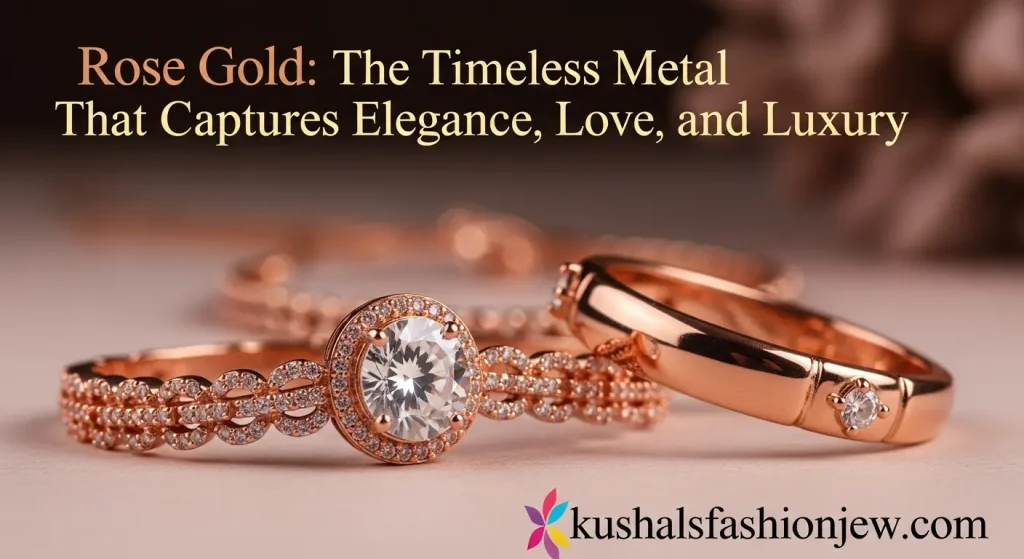
Rose gold has a long history dating back to the early nineteenth century. It became particularly popular in Russia, where it was often known as “Russian gold.” Jewellers combined gold with copper to create a stronger alloy with a distinctive pinkish tone. Over time, its popularity spread across Europe, especially to France during the Victorian era. Jewellery from this period frequently featured rose gold in detailed and artistic designs, showcasing its unique beauty, elegance and durability.
“With its distinctive colour and timeless appeal, rose gold reflects centuries of elegance and skilled craftsmanship.”
Rose Gold in Modern Times
Rose gold enjoyed a strong revival in contemporary fashion, moving well beyond its nineteenth-century roots. Today it is a favourite across engagement rings, fine jewellery, luxury watches, fashion accessories and even consumer electronics and interior details. Its romantic warmth and modern character allow designers to pair it with both classic gemstones and cutting-edge technology, giving the metal a fresh relevance in twenty-first-century style.
“With its distinctive colour and timeless appeal, rose gold reflects centuries of elegance and skilled craftsmanship.”
Why Rose Gold Is Popular
Aesthetic Appeal
The warm tone of rose gold gives it a distinctive appearance compared with traditional yellow and white gold. Its soft pink hue adds a romantic and sophisticated touch, making it a popular choice for jewellery and accessories. Rose gold also complements a wide range of gemstones, including diamonds, sapphires and emeralds, enhancing their beauty and creating an elegant overall look.
Universal Flattery
One of the main advantages of rose gold is its ability to suit a wide range of skin tones. Its warm pink hue complements the natural complexion and adds a soft, elegant touch to the overall look. This versatility makes rose gold a popular choice for various types of jewellery and fashion accessories.
“Rose gold suits a variety of skin tones, adding a warm and elegant touch to every look.”
Symbolism and Emotional Value
Rose gold is often linked with love, romance and timeless sophistication. Its warm and distinctive colour gives it a special emotional appeal, making it a popular choice for engagement rings, wedding bands and anniversary gifts. Rose gold jewellery can add a meaningful touch to special occasions while symbolising affection and lasting connection.
Durability and Practicality
The copper in rose gold not only gives the metal its distinctive pink hue but also adds strength and durability. This makes rose gold a practical choice for everyday jewellery, as it can better withstand regular wear while maintaining its attractive appearance over time.
Applications of Rose Gold
Jewellery
Rose gold has become a popular choice in fine jewellery, valued for its elegant appearance and versatility. From rings and necklaces to bracelets and earrings, rose gold designs offer a distinctive and sophisticated look. Jewellers often pair it with other metals and gemstones to create unique, stylish pieces that suit both classic and contemporary tastes.
Watches and Accessories
Rose gold watches are admired for their elegant and sophisticated appearance. Their warm metallic tone adds a stylish touch to both classic and contemporary designs. From luxury timepieces to more affordable options, rose gold watches have become a popular choice for those looking to complement modern fashion with a refined look.
Technology Products
Rose gold is no longer limited to jewellery and has also become a popular choice for consumer electronics. Smartphones, laptops, tablets and smartwatches are available with rose gold finishes that add a stylish and premium touch. Its soft metallic colour gives modern devices a fashionable appearance while maintaining a sleek and sophisticated look.
Interior Design
Rose gold has also become a popular element in modern interior design. From lighting fixtures and faucets to cabinet handles and decorative accents, rose gold details can add warmth, sophistication and elegance to both homes and commercial spaces. Its soft pinkish tone pairs well with neutral shades as well as bolder colours, making it a versatile choice for enhancing different interior styles.
Rose Gold Compared to Other Metals
Rose Gold Versus Yellow Gold
Yellow gold is known for its traditional elegance and bold, classic appearance, while rose gold offers a softer and warmer alternative with a romantic, modern feel. Both metals have their own unique charm, so the right choice ultimately depends on personal taste, style and the look you want to achieve.
Rose Gold Versus White Gold
White gold has a sleek, contemporary appearance that closely resembles platinum, making it a popular choice for modern jewellery designs. Rose gold, on the other hand, adds warmth and a distinctive pink hue, making it ideal for those who prefer a more unique and charming look. The choice between the two ultimately comes down to personal style and preference.
Rose Gold Versus Platinum
Platinum is valued for its rarity, durability and cool-toned appearance, while rose gold offers a warm and elegant alternative. Rose gold can provide a sophisticated look at a more accessible price, while its distinctive pink hue adds character and visual appeal. The best choice depends on factors such as durability, appearance, personal style and the emotional meaning attached to the jewellery.
Caring for Rose Gold
Daily Care
Regular cleaning helps maintain the shine, beauty and overall appearance of rose gold jewellery. Gently wipe each piece with a soft, clean cloth to remove oils, dust and dirt that can accumulate through everyday wear. For a deeper clean, use a mild cleaning solution and avoid harsh chemicals or abrasive materials that could affect the finish. Cleaning your rose gold jewellery regularly can help keep it looking polished and attractive for longer.
Cleaning Methods
To clean rose gold jewellery safely, use warm water mixed with a small amount of mild soap. Gently clean the surface with a soft brush, especially around intricate designs, settings and hard-to-reach areas where dirt can collect. Avoid using harsh chemicals or rough materials that may damage the finish. After cleaning, rinse the jewellery thoroughly with clean water and gently pat it dry with a soft, lint-free cloth.
Avoid Harsh Chemicals
Chlorine, bleach and strong detergents can affect the finish and appearance of rose gold jewellery over time. To help protect your pieces, remove them before swimming, bathing or carrying out household cleaning tasks. Keeping rose gold away from harsh chemicals can help preserve its warm colour, shine and overall beauty for longer.
Choosing the Right Rose Gold Jewellery
- Verify Karat and Purity: Check for proper karat markings to confirm the gold content and ensure you are getting the quality you expect.
- Assess Craftsmanship: Carefully examine the clasps, gemstone settings, edges and overall finish for signs of quality workmanship.
- Consider Your Lifestyle: Choose a karat level that suits how often you plan to wear the jewellery and the level of durability you need.
- Evaluate the Color: Look for an even and consistent pink hue across the entire piece, as variations may affect its overall appearance.
- Store It Properly: Keep rose gold jewellery separately from harder metals and other pieces to reduce the risk of scratches and surface damage.
Common Myths About Rose Gold
- Myth One: Rose Gold Is a New Trend: Although rose gold has gained popularity in modern fashion, it has been used in jewellery since the nineteenth century and has a long-standing history.
- Myth Two: Rose Gold Suits Only Certain Skin Tones: Rose gold has a warm, versatile hue that complements a wide range of skin tones, making it suitable for many different looks.
- Myth Three: Rose Gold Is Less Durable: The addition of copper gives rose gold greater strength and durability, making it suitable for regular wear when properly cared for.
“Rose gold combines timeless appeal, versatility and durability, proving that its charm goes beyond passing fashion trends.”
Frequently Asked Questions About Rose Gold
What gives rose gold its pink colour?
Copper alloyed with gold creates the warm pink hue of rose gold.
Is rose gold suitable for daily wear?
Yes. Ten and fourteen karat rose gold are durable enough for daily jewellery use.
Does rose gold suit all skin tones?
Yes. Its warm hue complements a wide variety of complexions.
How should I clean rose gold jewellery?
Use warm water, mild soap and a soft brush. Avoid harsh chemicals.
Is rose gold more expensive than other gold metals?
Rose gold is generally more affordable than platinum and varies in price compared to yellow or white gold, depending on karat and craftsmanship.
Conclusion
Rose gold is a timeless and versatile metal that beautifully combines elegance, durability and emotional appeal. Its distinctive warm pink hue sets it apart from traditional yellow and white gold, offering a sophisticated look that suits a variety of styles and skin tones. From fine jewellery and watches to fashion accessories and interior design, rose gold continues to be a popular choice for its unique charm and modern appeal.
Understanding its history, composition, symbolism and proper care can help you make informed choices and maintain the beauty of your rose gold pieces for years to come. With its perfect balance of classic elegance and contemporary style, rose gold remains a meaningful and enduring choice for both everyday wear and special occasions.