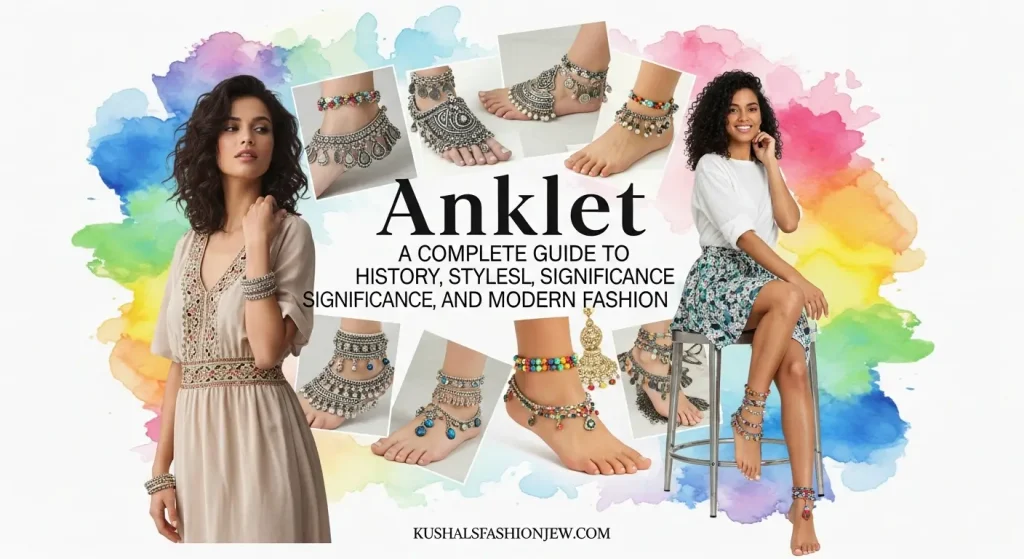
Anklets, also called ankle bracelets or ankle chains, are stylish jewelry pieces worn around the ankle to add beauty, elegance, and a fashionable touch to any outfit. Beyond their decorative appeal, anklets have a long history and hold cultural significance in many parts of the world. For thousands of years, they have been worn during traditional celebrations, ceremonies, and special occasions, while also remaining a popular choice in modern fashion.
One of the main reasons anklets remain popular is their versatility. They can easily complement casual outfits, festive clothing, traditional dresses, or sophisticated ensembles, making them suitable for a wide range of occasions. Whether you like a simple and delicate design or prefer a bold, detailed statement piece, there is an anklet style to match every personality, outfit, and fashion preference.
What Is an Anklet?
An anklet is a type of jewelry designed to be worn around the ankle, adding a stylish and elegant touch to the feet and overall appearance. Unlike bracelets or rings, anklets are specifically designed for the lower leg and can beautifully complement both traditional and modern outfits.
Traditionally, anklets have been crafted from metals such as gold, silver, and brass. Today, modern designs are available in a wide range of materials, including beads, leather, threads, and mixed materials, offering options to suit different styles and preferences.
Read Also: Payal Design
The History of Anklets
Ancient Origins
Anklets have a fascinating history that dates back thousands of years, making them one of the earliest forms of personal jewelry. Archaeological evidence suggests that anklets were worn as far back as 2500 BCE, including during the Indus Valley Civilization. Early anklets were often made from simple metals and shaped into bands or chains, while some featured beads, decorative details, and small pendants.
In ancient Egypt, anklets were associated with wealth, social status, and personal beauty. Gold anklets were often worn by wealthy and high-status individuals, while those made from more affordable materials were common among others. Egyptian women sometimes wore multiple anklets together to create layered and decorative styles. In addition to their beauty and fashion appeal, anklets could also carry ceremonial, cultural, and symbolic meanings.
Cultural Evolution
In South Asia, anklets gradually developed into the traditional payal, becoming an important part of women’s ethnic jewelry and attire. They have long been worn at weddings, religious ceremonies, festivals, and classical dance performances. The soft jingling sound produced as the anklet moves with each step or dance can add a distinctive musical element and is traditionally considered auspicious in many communities. Over generations, payals have become associated with beauty, femininity, tradition, and cultural heritage.
Anklets have also carried cultural and ceremonial meaning in various African and Middle Eastern communities. Depending on the region and local traditions, they may be connected with rituals, fertility, coming-of-age traditions, protection, or spiritual beliefs. These diverse practices show that anklets have often served purposes beyond decoration, combining personal adornment with cultural symbolism, tradition, and identity.
Types of Anklets
Anklets come in a wide variety of styles, designs, materials, and finishes, offering something for almost every taste and occasion. From delicate ankle chains and traditional payals to bold modern designs, each type of anklet has its own unique appearance and charm.Exploring the different types of anklets can make it easier to choose a design that matches your outfit, personal style, and the occasion. Whether you want a simple anklet for everyday wear or an eye-catching piece for weddings, festivals, and special events, there is a style to suit every preference.
Chain Anklets
Chain anklets are one of the most classic, elegant, and versatile types of ankle jewelry. Typically made from metals such as gold or silver, they feature a delicate chain designed to sit comfortably around the ankle. Their simple and timeless appearance makes them easy to pair with a wide range of outfits and occasions.
A minimalist chain anklet works well as an everyday accessory with casual outfits, sandals, or dresses. It can also bring a refined and sophisticated touch to formal or festive looks. With various chain patterns, thicknesses, and finishes available, chain anklets are an excellent choice for anyone who enjoys simple, elegant, and understated jewelry.
Beaded Anklets
Beaded anklets bring a colorful, fun, and eye-catching element to any outfit. They are usually created by stringing small beads onto a thread, cord, or chain, allowing for a wide range of designs. Depending on the style, they can feature simple patterns for a subtle look or bold combinations of colors and beads for a more striking appearance.
These anklets are particularly popular with casual and bohemian-inspired fashion and pair well with summer dresses, skirts, shorts, sandals, and beachwear. Beaded anklets can be made from many different materials, including glass, wood, gemstones, ceramic, and other decorative beads, giving you plenty of options to match your personal style.
Charm Anklets
Charm anklets feature delicate chains or bands adorned with small pendants, charms, and decorative elements. These details add personality and visual appeal while giving the wearer an opportunity to choose designs that represent their interests, memories, or individual style.
Charms can carry different meanings, including love, friendship, good luck, protection, travel, or memorable occasions. Common designs include hearts, stars, flowers, initials, symbols, and other decorative motifs. With so many options available, a charm anklet can be a unique and personal piece of jewelry that reflects the wearer’s personality and special moments.
Bangle Anklets
Charm anklets feature delicate chains or bands adorned with small pendants, charms, and decorative elements. These details add personality and visual appeal while giving the wearer an opportunity to choose designs that represent their interests, memories, or individual style.
Charms can carry different meanings, including love, friendship, good luck, protection, travel, or memorable occasions. Common designs include hearts, stars, flowers, initials, symbols, and other decorative motifs. With so many options available, a charm anklet can be a unique and personal piece of jewelry that reflects the wearer’s personality and special moments.
Layered Anklets
Bangle anklets are rigid, circular pieces of jewelry designed to sit around the ankle. They are especially popular in traditional South Asian jewelry and are often worn in pairs or layered together to create a distinctive jingling sound as the wearer moves.
These anklets can range from simple and polished designs to elaborate styles featuring intricate patterns and decorative details. Depending on the occasion and cultural tradition, bangle anklets are commonly worn at weddings, festivals, traditional celebrations, and classical dance performances. They complement ethnic outfits beautifully while adding both visual elegance and a rhythmic sound to movement.
Adjustable Anklets
Adjustable anklets are designed to offer a comfortable and flexible fit for different ankle sizes. They commonly feature secure clasps, sliding knots, extension chains, or adjustable links, allowing the wearer to modify the length according to their preference.
Thanks to their versatile design, adjustable anklets are suitable for both everyday wear and special occasions, including formal events and festive celebrations. They are a practical choice for anyone who wants a personalized fit while maintaining comfort, style, and ease of wear.
How to Wear Anklets
How to Wear Anklets
Wearing anklets effectively involves choosing a style that complements the occasion, outfit, footwear, and your personal fashion preferences. The right anklet can add a subtle finishing toucAnklets can be styled in many different ways, from adding a subtle touch of elegance to becoming a standout fashion accessory. The right design can complement your outfit, footwear, and overall personal style.
Here are some simple tips for styling anklets:
- Casual Outfits: Pair delicate chain or beaded anklets with sandals, flats, sneakers, or casual dresses for an effortless everyday look.
- Formal Wear: Choose elegant gold or silver anklets with minimal detailing to complement formal or festive outfits without taking attention away from the overall ensemble.
- Beach or Summer Wear: Shell, beaded, and colorful anklets pair beautifully with shorts, skirts, dresses, sandals, and other relaxed summer or vacation outfits.
- Layering: Wear two or more anklets together to create a trendy or bohemian-inspired look. Mixing different textures and designs can add visual interest while keeping the overall combination balanced.
- Footwear Matching: Consider your footwear when selecting an anklet. Delicate designs work well with open sandals and heels, while bolder styles can complement casual shoes and relaxed outfits.
With thoughtful styling, anklets can provide the perfect finishing touch to almost any outfit while allowing you to express your individual personality and fashion sense.
Cultural and Symbolic Significance
Anklets have held cultural and symbolic importance in different regions and societies for centuries. Their meanings can differ based on local customs, traditions, and beliefs, making them more than simply decorative pieces of jewelry.
In India, the payal is an important part of traditional jewelry and is often associated with femininity, cultural heritage, and social traditions. Payals are commonly worn at weddings, festivals, religious celebrations, and classical dance performances. The soft jingling sound produced by anklets is traditionally considered auspicious in many communities and may be associated with celebration, joy, and positive energy.
Modern Fashion and Celebrity Influence
In recent years, anklets have regained popularity as a stylish and versatile fashion accessory. Celebrities, influencers, and fashion enthusiasts have helped bring them back into the spotlight, wearing anklets with everything from casual everyday outfits to elegant formal looks and glamorous event attire. Minimalist chain anklets, layered designs, and charm styles have become particularly popular among modern jewelry lovers.
Contemporary anklet designs often blend traditional craftsmanship with modern fashion trends. Designers experiment with gemstones, mixed metals, beads, charms, and unique materials to create a wide variety of styles for different tastes. This combination of classic elements and contemporary aesthetics has made anklets suitable for diverse personal styles, outfits, and occasions.
Popular Materials for Anklets
- Anklets are made from a wide variety of materials, with each option offering its own appearance, texture, and character. The material you choose can influence whether an anklet has a traditional, casual, elegant, or contemporary look.
- Gold: Gold anklets have a timeless and elegant appeal, making them a popular choice for weddings, festivals, and other traditional or ceremonial occasions.
- Silver: Silver anklets offer a classic and versatile option that works well for everyday wear. Their simple appearance allows them to complement both traditional and modern outfits.
- Leather: Leather anklets create a relaxed and rugged appearance and are often associated with bohemian, casual, and summer-inspired fashion.
- Beads: Beaded anklets add color and personality to an outfit. They are especially suitable for casual looks, vacations, beachwear, and warm-weather styles.
- Mixed Metals: Mixed-metal anklets combine materials such as gold and silver to create a modern and distinctive look. They are a great option for those who enjoy experimenting with contemporary jewelry styles.
Anklet Care and Maintenance
PropeHow to Care for Anklets
Proper care and maintenance can help anklets retain Proper care and maintenance can help preserve the beauty, shine, and durability of anklets for a longer time. Since different materials may require different cleaning and storage methods, it is important to care for each anklet according to its design and material.
Here are some simple tips for keeping your anklets in good condition:
- Store Separately: Keep each anklet in an individual jewelry pouch or separate compartment to help prevent scratches, tangling, and accidental damage.
- Clean Carefully: Use appropriate jewelry-cleaning methods or products recommended for the specific material to maintain the anklet’s appearance and shine.
- Avoid Water and Chemicals: Remove anklets before bathing, swimming, exercising, or applying perfumes, lotions, and other products that could affect their finish.
- Check Regularly: Periodically inspect clasps, chains, links, beads, and decorative elements for signs of loosening, damage, or wear.
- Handle with Care: Avoid pulling, bending, or stretching delicate chains and decorative details when putting on or removing an anklet.
With proper care and regular maintenance, you can help extend the life of your favorite anklets while keeping them looking beautiful and well maintained.
Diy Anklets and Customization
Personalized and DIY anklets have become increasingly popular among those who enjoy creating jewelry that reflects their personality and individual style. Making your own anklet allows you to choose the materials, colors, charms, and patterns you like, resulting in a unique piece that can have personal meaning.
With basic supplies such as beads, threads, chains, charms, and clasps, you can create customized anklets for everyday wear, special occasions, or meaningful gifts. The possibilities are virtually endless, ranging from simple and delicate designs to colorful, detailed, and eye-catching creations.
Styling Anklets for Different Occasions
Anklets can be styled in numerous ways to match different occasions, outfits, personal preferences, and fashion styles, making them a versatile accessory for both everyday wear and special events.
- Daily Wear: Simple chain or adjustable anklets pair well with casual shoes, sandals, and relaxed everyday outfits.
- Beach or Vacation: Beaded, shell, and colorful anklets are ideal for beachwear, summer clothing, and vacation-inspired looks.
- Formal Events: Minimalist gold or silver anklets can add a subtle touch of elegance without overpowering the outfit.
- Parties and Celebrations: Layered, charm, or bangle anklets can create a bold and festive appearance that complements special-event attire.
The right anklet can enhance an outfit while allowing you to express your personal style, cultural traditions, and fashion preferences.
Anklet Comparison Table
| Type of Anklet | Material | Occasion | Style Notes |
| Chain Anklet | Gold, Silver | Daily Wear, Formal | Simple, elegant, versatile |
| Beaded Anklet | Glass, Wood, Gemstones | Casual, Summer | Colorful, playful, bohemian |
| Charm Anklet | Metal, Mixed | Casual, Formal, Personal Style | Includes meaningful charms |
| Bangle Anklet | Metal | Traditional, Ceremonial | Rigid, creates a jingling sound, often layered |
| Layered Anklet | Mixed Materials | Parties, Fashion Statements | Multiple chains for a bold look |
| Adjustable Anklet | Metal, Thread | Daily Wear, Casual, Versatile | Comfortable fit for any ankle |
Frequently Asked Questions About Anklets
What is an anklet?
An anklet is a piece of jewelry worn around the ankle. It can be made of metal, beads, leather, or thread and is used for decoration, cultural expression, or fashion purposes.
What does wearing an anklet symbolize?
The symbolism of anklets varies across cultures. In some traditions, it represents marital status or femininity. In modern fashion, it often reflects personal style, elegance, and individuality.
Which ankle should I wear an anklet on?
Anklets can be worn on either the left or right ankle. The choice depends on personal comfort and style preference, and layering multiple anklets is also fashionable.
Are anklets only for women?
Historically, anklets were primarily worn by women, but today, men also wear anklets as a fashion accessory. Both genders can enjoy wearing them.
What materials are anklets made from?
Anklets are made from gold, silver, brass, leather, beads, shells, thread, and mixed metals. Each material creates a unique look and is suitable for different occasions.
How should I care for my anklet?
To maintain an anklet, store it separately, clean it regularly according to the material, avoid water or harsh chemicals, and check clasps and beads for wear.
Conclusion
Anklets are timeless jewelry pieces that beautifully blend elegance, cultural heritage, and personal style. From ancient civilizations to modern fashion, they have continued to evolve while retaining their unique charm and significance. With a wide variety of designs, materials, and styles available, anklets can be worn for everyday occasions, weddings, festivals, formal events, and celebrations.
Whether you prefer a delicate chain, colorful beads, meaningful charms, or layered designs, the right anklet can add a stylish finishing touch to any outfit. By choosing a design that suits your personality and styling it thoughtfully, you can enjoy both the beauty of modern fashion and the rich traditions connected with this timeless accessory.