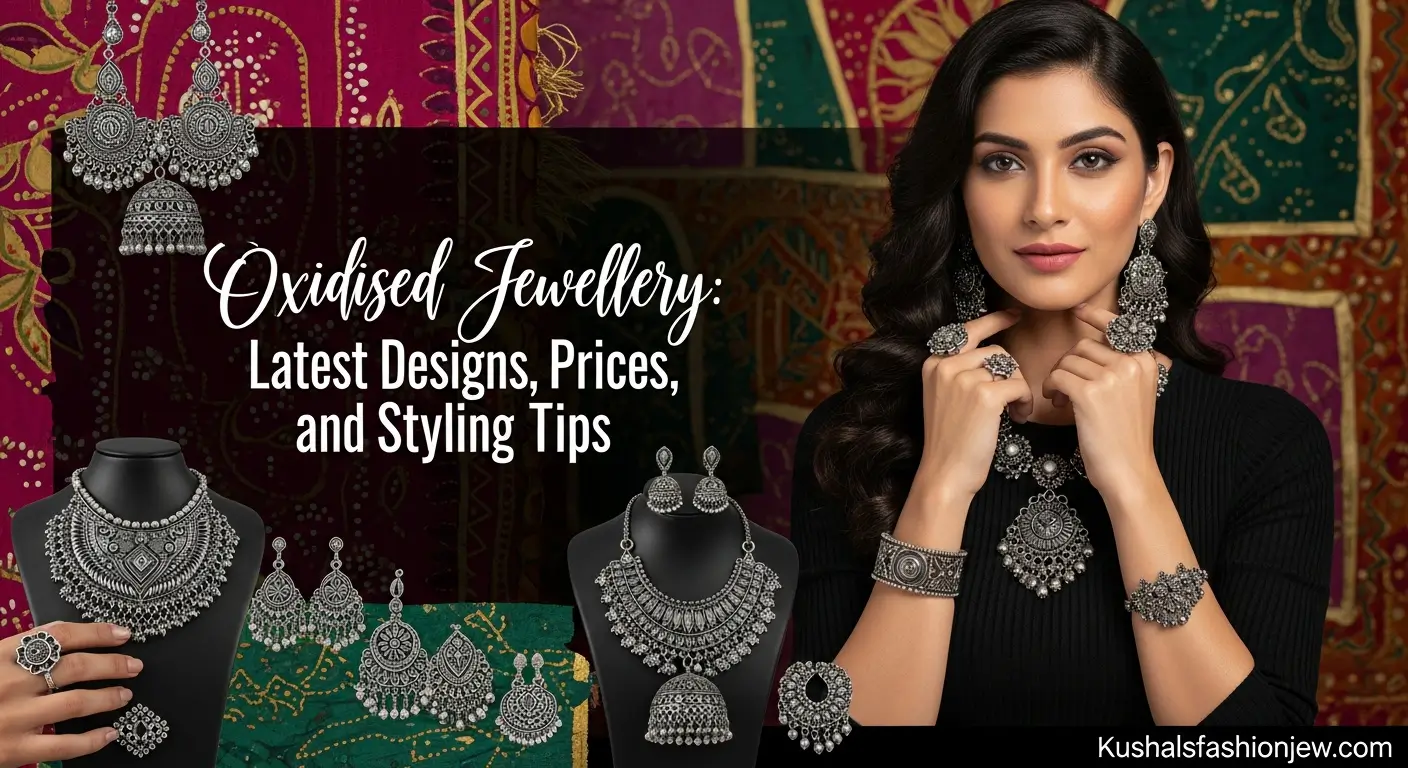
Oxidised jewellery is known for its darkened, antique-style finish, which gives detailed patterns a softer, vintage appearance. It pairs well with traditional outfits and with simple modern clothing, and it comes in styles ranging from small studs to bold statement pieces. This guide explains what oxidised jewellery is, the main designs available, and how to choose, style and care for it.
What Is Oxidised Jewellery?
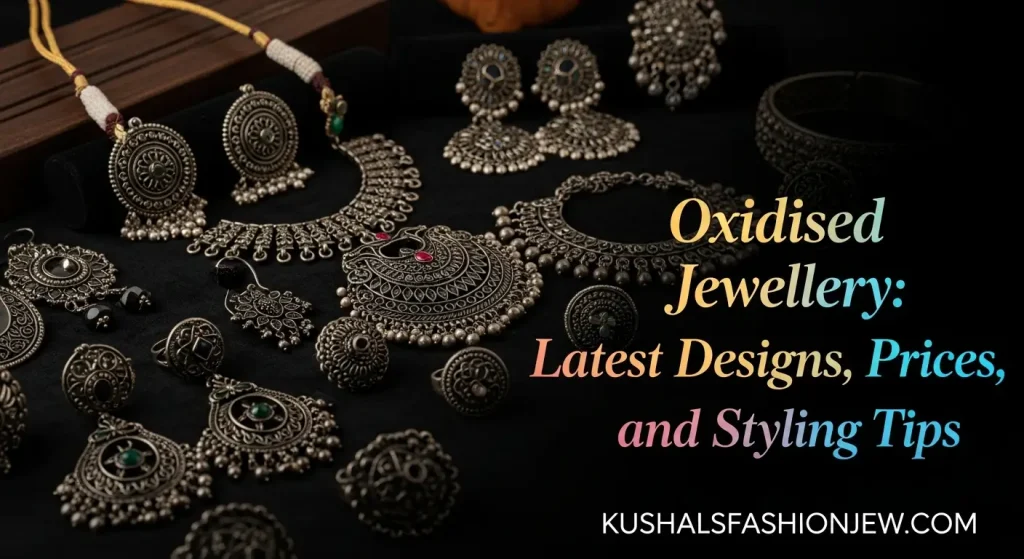
Oxidised jewellery is usually made from silver or a silver-based alloy that has been treated to darken the surface, especially in recessed areas. This darkening highlights engraving, filigree and other surface details, and creates the matte, aged look that distinguishes it from bright, polished silver.
The finish can vary from piece to piece. Some items have only a light darkening in the grooves, while others have a deeper, more even antique tone. Because the finish is part of the design, check photographs and the product description carefully before buying, and ask the seller if the finish is not described clearly.
History and Cultural Background
Oxidised jewellery has long been associated with traditional and folk styles in India, where detailed silver work has been worn for everyday use and for festive occasions. Over time, the same finish has been used in contemporary designs as well, so oxidised pieces are now worn with both ethnic and western clothing.
Traditional roots remain visible in many designs, including temple-inspired motifs, floral patterns and bold tribal-style shapes. Modern versions may simplify those patterns or combine them with plain chains and minimal settings, giving buyers a choice between a strongly traditional look and a more understated one.
Main Types of Oxidised Jewellery
Oxidised Necklaces
Oxidised necklaces range from short chokers and pendants to longer, layered chains. A detailed pendant often works best on its own, while a simpler chain can be layered with other pieces. For necklace styles in general, see the Necklaces category.
Oxidised Earrings
Oxidised earrings include studs, drops, hoops and jhumka-style designs. Large, detailed earrings usually suit a simpler necklace or no necklace at all, while small studs can be worn daily with other jewellery. For traditional drop and bell-shaped styles, see the Jhumkas category.
Oxidised Bangles and Bracelets
Oxidised bangles and bracelets are often stacked or worn in groups, which suits the layered look of this style. Check the size and fit before buying, since a bangle that is too loose can slip, and one that is too tight may be uncomfortable.
Oxidised Rings and Anklets
Oxidised rings often feature bold shapes, engraving or stone-like accents, while anklets and toe rings add detail to traditional outfits. As with other pieces, check the size, the setting and the care advice in the listing before ordering.
Latest Designs and Motifs
Current oxidised designs include tribal-inspired shapes with bold outlines, floral and nature motifs, temple-inspired patterns, minimalist pieces with clean lines, and large statement necklaces and earrings. Minimalist oxidised jewellery suits work and casual wear, while statement pieces are better saved for occasions when you want one item to stand out.
When choosing between these styles, consider your existing wardrobe. If most of your clothes are plain, a detailed oxidised piece can add interest. If your clothes already have heavy embroidery or pattern, a simpler oxidised design is usually easier to wear.
How to Choose Oxidised Jewellery
- Check the base material and finish described in the listing.
- Look closely at the craftsmanship: edges, clasps and settings should look neat and secure.
- Choose the size and weight for how often you will wear the piece.
- Decide whether you want a traditional, minimalist or statement style.
- Read the care and return information before ordering.
If a specific piece interests you, Check latest price on Amazon and compare the listing details, including material, finish, size and care advice, rather than relying on photographs alone.
Styling Oxidised Jewellery
Traditional Wear
Oxidised jewellery pairs naturally with sarees, kurtis and other ethnic outfits. A temple-inspired necklace or a pair of jhumka-style earrings can complete a festive look without needing much additional jewellery.
Casual Outfits
For casual outfits, keep oxidised jewellery simple: a pair of studs, a small pendant or a single bracelet. This adds character to jeans, tops or simple dresses without making the outfit feel heavy.
Work and Festive Occasions
For work, choose small, neat oxidised pieces that do not catch on clothing. For festive events, you can wear larger or layered pieces, but it still helps to let one item take the lead and keep the rest simpler. For bridal and occasion styles, also explore the Bridal Jewelry category.
Mixing Oxidised Jewellery with Other Pieces
Oxidised jewellery can be worn with plain silver pieces, since both share a cool tone, but the contrast between bright silver and a darkened finish is part of the effect. It can also be worn with watches, fabric bracelets or delicate chains, provided one piece remains the focal point. Avoid wearing several large, detailed items together, as the overall look can become cluttered.
Caring for Oxidised Jewellery
- Store oxidised jewellery in a cool, dry place, away from moisture and direct sunlight.
- Keep pieces separate so they do not scratch each other.
- Avoid perfume, harsh chemicals and excessive water, which can affect the finish.
- Remove oxidised jewellery before bathing, exercising or cleaning.
- Clean gently with a soft, dry cloth, and avoid harsh polishing that could remove the darkened finish.
Note that the darkened finish is intentional. Aggressive cleaning or polishing can lighten it, so follow the care advice in the listing and clean only as much as needed to remove dust or surface marks.
Common Misunderstandings
A dark or antique finish does not by itself mean that a piece is low in quality; it is a design choice. Quality is better judged from the material stated in the listing, the neatness of the work, and the security of clasps and settings. Likewise, oxidised jewellery is not only for traditional wear: minimalist oxidised pieces can suit modern and casual outfits as well.
Frequently Asked Questions
What is oxidised jewellery?
Oxidised jewellery is made from silver or a silver-based alloy that has been treated to give it a darkened, antique-style finish.
Is oxidised jewellery suitable for daily wear?
Lightweight and minimalist oxidised pieces can suit everyday wear, while bold or heavy designs are usually more comfortable for shorter occasions.
How should I style oxidised jewellery with casual outfits?
Pair simple necklaces, rings or earrings with plain tops or dresses, and let one oxidised piece stand out rather than wearing several large items together.
Can oxidised jewellery be mixed with other metals?
Yes, it can be mixed carefully. Keep one focal piece and check that the styles sit well together before wearing them out.
How do I maintain oxidised jewellery?
Store it dry and separately, avoid water and chemicals, and clean it gently with a soft cloth so the darkened finish is not polished away.
Conclusion
Oxidised jewellery combines traditional detail with a distinctive antique finish, and it works across traditional, casual and festive outfits. By checking the material and finish, choosing a style that suits your wardrobe, and caring for the darkened surface gently, you can enjoy oxidised pieces as a versatile part of your jewellery collection.