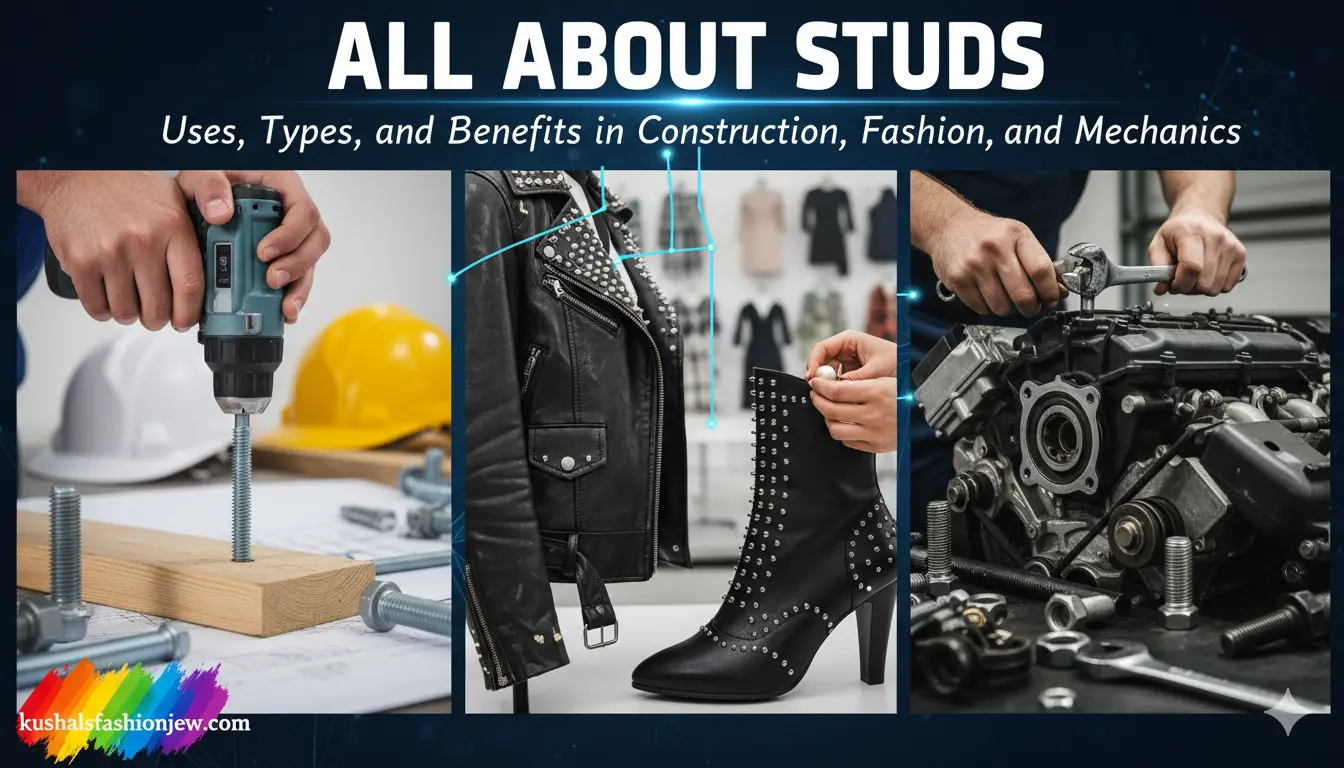
Welcome to kushals fashion jew. Studs are one of the most versatile and widely used components in multiple industries. From construction to fashion, jewelry, and automotive applications, the term studs carries significant importance. A proper understanding of studs, their types, functions, and benefits is essential for anyone in professional fields, hobbyists, and everyday users alike. Studs are small yet powerful elements that connect, support, and enhance functionality in numerous applications.
This guide provides an in-depth exploration of studs, including their history, types, material considerations, applications, maintenance, and key advantages. By the end of this article, you will have a complete understanding of studs, empowering you to make informed decisions whether for construction, fashion, mechanical, or sporting uses.
Pull Quote: “Studs may be small, but their impact is profound, offering strength, style, and functionality across various fields.”
Understanding Studs and Their Significance
The term studs originates from Old English, initially referring to a post or support. Over time, the word has expanded to describe any component that projects from a surface, provides structural support, or serves decorative and functional purposes. Despite their size, studs hold significant value in design, construction, and engineering.
Studs are essential because they provide stability, connection, and enhancement. In construction, they form the backbone of walls. In fashion, they add visual appeal and texture. In mechanical applications, studs provide secure fastening. This diversity highlights the importance of understanding the different types and applications of studs.
Pull Quote: “The strength of studs lies in their simplicity, serving both practical and aesthetic purposes in diverse industries.”
Read Also: square stylish simple mehndi design
The Various Types of Studs

Service Studs can be classified based on their applications. The primary types of studs include construction studs, jewelry studs, fashion studs, mechanical studs, and footwear studs. Each type has unique properties and serves specific functions.
Construction Studs
Construction studs are vertical members used in framing walls and supporting structures. They are typically made from wood or metal and provide essential structural support for buildings. Studs in construction carry the load of walls, ceilings, and roofs while also offering spaces for insulation, wiring, and plumbing.
Standard spacing for construction studs is usually sixteen to twenty-four inches apart. The type of material, either wood or steel, is chosen based on building requirements, load, and environmental considerations. Wooden studs are widely used in residential buildings, while metal studs are preferred in commercial and high-rise construction due to their strength and fire resistance.
Pull Quote: “Construction studs form the skeleton of walls, ensuring stability, durability, and safety in every building.”
Fashion and Decorative Studs
Fashion studs are small decorative components used on garments, footwear, and accessories. They add style, texture, and a visually appealing element to everyday items. Fashion studs can be made from metal, plastic, or synthetic materials, depending on the design and desired durability.
Fashion studs serve both decorative and functional purposes. On jackets, belts, bags, and footwear, studs create unique patterns and textures. In sports footwear, studs, also called cleats, provide grip and stability while maintaining a stylish appearance.
Pull Quote: “Fashion studs combine aesthetic elegance with functional design, transforming ordinary items into statement pieces.”
Jewelry Studs
Jewelry studs, especially earrings, are small, elegant accessories that sit close to the earlobe. They can be made from gold, silver, platinum, diamonds, or gemstones, offering a range of styles for everyday wear and special occasions. Jewelry studs are preferred for their minimalistic design, comfort, and timeless appeal.
The simplicity of stud earrings allows them to complement other accessories without overpowering the overall look. They are versatile and suitable for all age groups, making them a staple in personal and professional fashion.
Pull Quote: “Jewelry studs exemplify simplicity and elegance, offering beauty without compromise.”
Mechanical Studs
Mechanical studs are threaded fasteners used in automotive, machinery, and engineering applications. Unlike bolts, mechanical studs are often fixed in place, allowing nuts to secure components effectively. They are widely used in wheel assemblies, engines, and industrial machinery for strength and stability.
Mechanical studs are preferred because they distribute stress evenly, are easy to replace, and maintain alignment. They are typically made from high-strength alloys to withstand heavy loads and torque requirements.
Pull Quote: “Mechanical studs provide reliable connections that ensure safety, stability, and long-term performance.”
Footwear Studs
Footwear studs are protrusions on the soles of shoes, particularly for sports, to provide traction and stability. They are essential in sports like football, soccer, and rugby, where grip is crucial for performance and safety. Footwear studs are made from metal, rubber, or plastic, depending on the type of surface and activity.
These studs are strategically designed to enhance performance, reduce slips, and increase durability. Proper selection of footwear studs can significantly impact an athlete’s performance on different terrains.
Pull Quote: “Footwear studs are designed for performance excellence, combining safety, stability, and control on the field.”
Material and Design Considerations for Studs
The material and design of studs are critical for their effectiveness. Construction studs require materials like wood for residential structures and steel for commercial buildings. Fashion and jewelry studs use precious metals or durable synthetic materials for elegance and longevity. Mechanical studs demand high-strength alloys for heavy-duty applications, while footwear studs rely on durable and lightweight materials for traction.
Design considerations include shape, size, and projection height. In construction, studs must align perfectly for structural integrity. In fashion and jewelry, design ensures aesthetic appeal. In mechanical and sports applications, the design ensures functionality, safety, and performance.
Applications of Studs Across Industries
Studs are indispensable in multiple industries, each requiring specific types and uses.
In Construction
Construction studs are used in framing walls, supporting roofs, and maintaining overall building stability. They provide attachment points for drywall, paneling, and insulation while facilitating wiring and plumbing. Properly installed studs ensure structural integrity and longevity in both residential and commercial buildings.
In Fashion and Accessories
Fashion studs enhance the visual appeal of clothing and accessories. They are used to create unique textures, patterns, and styles. Studded jackets, belts, bags, and shoes have become popular worldwide for their distinctive and stylish appearance. Fashion studs combine functionality and creativity, making ordinary products remarkable.
In Jewelry
Jewelry studs, particularly earrings, are versatile accessories. They are simple, comfortable, and timeless, making them suitable for everyday wear and formal occasions. Jewelry studs can be designed with precious metals, diamonds, or gemstones, offering elegance and sophistication in a minimalistic form.
In Automotive and Machinery
Mechanical studs provide strong and secure fastening in automotive and industrial applications. Wheel studs ensure proper attachment and alignment of wheels, while engine and flange studs maintain critical connections in machinery. Mechanical studs reduce maintenance time and improve safety in heavy-duty environments.
In Sports and Outdoor Activities
Footwear studs enhance performance, safety, and stability for athletes. They reduce the risk of slipping and improve traction on grass, artificial turf, or rough terrain. Properly designed studs in sports shoes optimize efficiency and provide better control during dynamic movements.
Pull Quote: “Studs are essential components across multiple industries, offering stability, style, and functional excellence.”
Advantages of Studs
Studs offer numerous benefits that make them indispensable across industries.
- Durability: Designed to withstand stress, wear, and environmental exposure.
- Versatility: Serve functional, structural, and decorative purposes.
- Ease of Installation: Often easier to install and replace compared to alternatives like bolts or nails.
- Aesthetic Value: Fashion and jewelry studs enhance appearance while maintaining functionality.
- Safety and Performance: Footwear and mechanical studs improve grip, stability, and security.
Understanding these advantages ensures that the correct type of studs is selected for any application.
Choosing the Right Stud
Selecting the appropriate stud depends on multiple factors:
- Purpose: Identify whether the stud is for support, decoration, or fastening.
- Material: Ensure the material is suitable for environmental conditions and load requirements.
- Size and Shape: Choose dimensions that meet functional and aesthetic needs.
- Installation: Consider whether the stud is permanent or removable, and if specialized tools are required.
- Durability: Evaluate resistance to wear, corrosion, and mechanical stress.
Pull Quote: “Choosing the right stud is critical for ensuring efficiency, reliability, and long-term performance.”
Common Mistakes with Studs
Even small studs can cause significant problems if misused. Common mistakes include:
- Using the wrong material for the environmental conditions.
- Incorrect spacing or alignment in construction studs.
- Ignoring load capacity in mechanical studs.
- Neglecting maintenance of decorative or functional studs.
- Selecting fashion studs that do not complement the design.
Avoiding these mistakes ensures studs function optimally and maintain their structural and aesthetic integrity.
Maintenance and Longevity of Studs
Maintaining studs is essential for long-term effectiveness. Construction studs should be checked for damage, warping, or moisture exposure. Fashion and jewelry studs need cleaning to prevent tarnishing. Mechanical studs require inspection for wear, thread integrity, and torque consistency. Footwear studs should be monitored for wear and replaced when necessary to maintain performance.
Pull Quote: “Proper maintenance prolongs the life and functionality of studs, ensuring consistent performance across all applications.”
Frequently Asked Questions About Studs
What is the main function of studs in construction?
Studs provide vertical support, maintain structural integrity, and create attachment points for wall surfaces, insulation, and utilities.
Are studs only made from metal?
No. Studs can be made from wood, metal, plastic, or synthetic materials, depending on their purpose, including construction, fashion, jewelry, and sports.
How are jewelry studs different from other earrings?
Jewelry studs sit close to the earlobe and consist of a single decorative element, offering minimalistic elegance suitable for everyday wear.
Can mechanical studs be reused?
Yes, if they are undamaged and the threads are intact, mechanical studs can often be reused safely.
Why are footwear studs important?
Footwear studs enhance grip, stability, and safety, reducing slips and improving performance on various surfaces.
Conclusion
Studs are small but highly significant components that play vital roles across various industries, including construction, fashion, jewelry, mechanics, and sports. They provide structural support, secure connections, enhance aesthetic appeal, and improve performance, depending on their application. Understanding the types of studs, their materials, design considerations, and proper maintenance ensures durability, efficiency, and safety. Whether for framing walls, decorating garments, fastening machinery, or improving athletic footwear, studs combine functionality with style and reliability. Recognizing their versatility and importance empowers professionals, enthusiasts, and everyday users to make informed choices, maximizing the benefits of studs in every application.