Welcome to Kushals Fashion Jew. Temple jewellery is one of the most iconic forms of traditional Indian jewellery, admired for its intricate craftsmanship, spiritual symbolism, and timeless beauty. With roots deeply connected to Indian culture and heritage, temple jewellery has remained popular for centuries. Originally used to adorn deities in South Indian temples, it gradually became an important part of bridal fashion, festival wear, and classical dance costumes. Today, temple jewellery beautifully combines tradition, devotion, and elegance, making it a favourite among jewellery lovers and fashion enthusiasts.
Known for its rich gold finish, precious stones, and traditional motifs inspired by gods, goddesses, flowers, and nature, temple jewellery reflects the artistic excellence of Indian craftsmen. Its origins are strongly associated with South India and the royal traditions of the Chola and Pandya periods, when skilled artisans created exquisite ornaments for temple deities. Over time, these designs became popular beyond temples and found their place in weddings, cultural celebrations, and classical performances.
The Historical Significance of Temple Jewellery
Temple jewellery has a rich history deeply rooted in India’s cultural and religious traditions. It is believed to have originated in South India, where intricately crafted ornaments were created to adorn temple deities. These jewellery pieces were designed with sacred motifs and symbols that represented devotion, prosperity, and divine blessings.
During the rule of dynasties such as the Cholas, Pandyas, and Nayakas, temple jewellery flourished as skilled artisans developed elaborate designs using gold, precious stones, and traditional patterns. Over time, its use expanded beyond temples and became an important part of bridal jewellery, classical dance costumes, and festive celebrations.
Origins in South Indian Temples
Temple jewellery has its roots in the ancient temples of South India, where it was originally created to adorn gods and goddesses. During the Chola and Pandya periods, temples served not only as places of worship but also as important centers of art, culture, and craftsmanship. Gold, gemstones, and other valuable offerings made to deities were skillfully transformed by artisans into beautifully detailed jewellery. Many designs drew inspiration from temple architecture, divine figures, flowers, animals, and mythical creatures.
The importance of temple jewellery goes far beyond its decorative appeal. It became a meaningful way to express devotion, preserve religious stories, and represent spiritual beliefs. Pendants, necklaces, earrings, and other ornaments were carefully designed with symbolic details, combining artistic beauty with religious significance.
Evolution from Religious to Personal Use
Initially reserved for temple deities, temple jewellery gradually became a part of personal adornment and cultural traditions. Classical dancers performing Bharatanatyam, Kuchipudi, and Odissi began wearing detailed jewellery sets to complement their costumes, expressions, and graceful movements on stage. In South India, brides also embraced temple jewellery as an essential part of traditional wedding attire, where it came to represent beauty, prosperity, tradition, and family heritage.
Read Also: gold jhumka design
Craftsmanship and Materials in Temple Jewellery
Traditional Materials
Temple jewellery is traditionally crafted using high-quality gold, often 22-karat gold, which holds special cultural and religious significance in India. Artisans also enhance these ornaments with precious and semi-precious stones, including rubies, emeralds, sapphires, pearls, and polki diamonds, adding richness and elegance to every design.
Intricate Meenakari work is often used to introduce vibrant colors and detailed patterns, giving temple jewellery its distinctive divine appeal. Beyond their beauty, the materials and gemstones used in these ornaments are often associated with symbolic meanings.
Techniques and Crafting Process
Creating temple jewellery demands exceptional skill, patience, and attention to detail. Skilled artisans use traditional techniques such as repoussé, engraving, filigree, embossing, and granulation to create intricate patterns and designs. From delicate floral motifs to detailed representations of deities, every element is carefully handcrafted with remarkable precision.
Depending on the complexity of the design, a single temple jewellery set can take several weeks or even months to complete. This time-intensive process highlights the artisan’s craftsmanship, dedication, and respect for India’s cultural traditions.
Iconic Motifs and Design Elements
Temple jewellery is instantly recognizable for its rich symbolism, intricate detailing, and distinctive traditional motifs. Each design element carries cultural and spiritual significance, reflecting India’s deep-rooted heritage and artistic traditions.
Common elements include:
- Goddess Lakshmi: Represents wealth, fortune, and divine blessings.
- Peacocks and Lotus Flowers: Symbolize beauty, purity, and spiritual growth.
- Nataraja (Lord Shiva): Depicts cosmic dance and universal harmony.
- Elephants and Yali Figures: Represent strength, protection, and auspiciousness.
These motifs are often intricately carved or embossed on necklaces, earrings, bangles, and headpieces, making temple jewellery not only decorative but spiritually meaningful.
Types of Temple Jewellery
Temple jewellery comes in a wide variety of designs, each reflecting India’s rich cultural heritage and traditional craftsmanship. From elaborate necklaces and statement earrings to elegant bangles, waist belts, and headpieces, every piece is designed with intricate motifs and symbolic details.
Necklaces and Haram Sets
Temple necklaces are among the most iconic forms of traditional temple jewellery, ranging from elaborate ceremonial harams to elegant chokers. Designed with intricate detailing, these necklaces often feature divine motifs, floral patterns, and colourful gemstone embellishments that reflect India’s rich artistic heritage.
For bridal occasions, temple necklaces are commonly paired with matching earrings, bangles, and other accessories to create a complete and regal look. Their traditional designs and spiritual symbolism add a graceful, luxurious, and timeless appeal to the overall bridal ensemble.
Earrings and Jhumkas
Jhumkas are iconic bell-shaped earrings that hold a special place in temple jewellery, making them a popular choice for both brides and classical dancers. They often feature intricate embossed patterns, divine motifs, and beautiful gemstone clusters that enhance their traditional charm.
Traditional temple jhumkas are usually heavier and designed for ceremonial occasions, while modern versions are available in lightweight styles for greater comfort. This combination of classic detailing and contemporary practicality makes jhumkas suitable for weddings, festivals, performances, and everyday ethnic looks.
Bangles and Bracelets
Temple bangles are known for their broad designs, intricate detailing, and traditional craftsmanship. They are often embellished with gemstones, engraved patterns, or colourful enamel work, adding richness and elegance to the overall look. When paired with temple necklaces and earrings, these bangles create a beautifully coordinated and graceful ensemble.
Beyond their decorative appeal, temple bangles hold cultural and symbolic importance. They are traditionally associated with prosperity, good fortune, and family heritage, making them a cherished accessory for weddings, festivals, and other special occasions.
Headpieces, Maang Tikka, and Vanki
Head ornaments such as maang tikkas and vanki armlets add the finishing touch to a traditional temple jewellery look. Often decorated with deity figures, floral patterns, and sacred symbols, these accessories enhance the wearer’s elegance while preserving the cultural and spiritual essence of the jewellery.
Temple jewellery is more than a beautiful accessory; it brings together tradition, devotion, and artistic craftsmanship. When paired with traditional attire, each piece helps create a graceful expression of India’s rich cultural heritage.
Temple Jewellery in Weddings
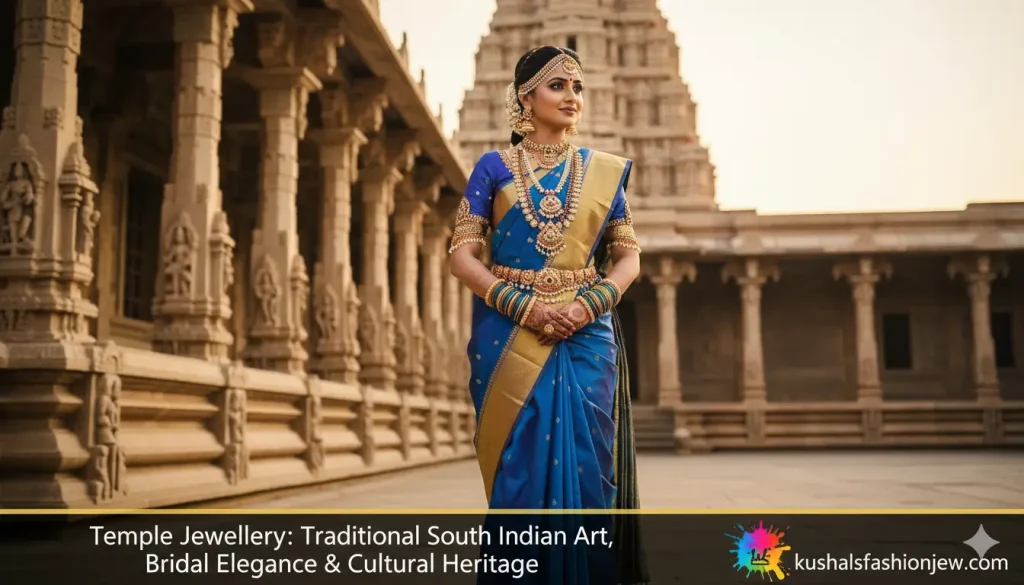
Temple jewellery holds a special place in Indian weddings, especially in South Indian bridal traditions. Its rich gold finish, divine motifs, and intricate craftsmanship add a regal and traditional touch to the bride’s appearance. From elaborate necklaces and jhumkas to bangles, waist belts, and maang tikkas, each piece enhances the bridal ensemble while reflecting cultural heritage.
Significance for Brides
Temple jewellery holds a special place in South Indian weddings, where it is cherished for its traditional beauty and cultural significance. Brides often wear complete temple jewellery sets featuring necklaces, earrings, bangles, waist belts, and headpieces, creating a coordinated and majestic bridal look.
Beyond enhancing the bride’s appearance, these jewellery pieces are traditionally associated with auspiciousness, prosperity, and family heritage. Wearing temple jewellery during weddings also reflects the continuation of cherished customs and cultural traditions from one generation to the next.
Contemporary Bridal Adaptations
Modern brides are increasingly choosing lightweight and versatile temple jewellery that combines traditional charm with contemporary style. Designers are reimagining classic motifs in modern patterns, making these pieces easy to pair with both traditional sarees and fusion wedding outfits.
Gold-plated and imitation temple jewellery options have also made these designs more accessible to a wider audience. They offer an elegant and traditional appearance while allowing brides to enjoy the cultural beauty of temple jewellery at a more affordable price.
Role in Classical Dance
Temple jewellery plays an important role in Indian classical dance forms such as Bharatanatyam, Kuchipudi, and Odissi. Dancers wear elaborate jewellery sets featuring necklaces, jhumkas, bangles, waist belts, and anklets to complement their costumes and movements. These ornaments enhance facial expressions, body movements, and storytelling, adding greater visual impact to every performance.
In classical dance, temple jewellery is more than a decorative accessory. It serves as a powerful medium of expression, storytelling, culture, and tradition, helping dancers portray emotions and connect their performances with India’s rich artistic heritage.
Festivals and Cultural Celebrations
Temple jewellery is often worn during major Indian festivals such as Diwali, Navratri, and Pongal, as well as weddings, religious ceremonies, and family celebrations. Its intricate designs and traditional motifs reflect devotion, cultural pride, prosperity, and elegance, making it a meaningful choice for special occasions.
For many families, temple jewellery also represents a treasured connection to their heritage. Jewellery pieces are often passed down from one generation to another as family heirlooms, preserving memories, traditions, and craftsmanship while keeping India’s rich cultural legacy alive.
Preserving Temple Jewellery
To preserve the beauty and traditional value of temple jewellery, proper care and handling are essential. Jewellery should be stored in soft pouches or fabric-lined boxes to prevent scratches and damage. After wearing, gently clean each piece with a soft, dry cloth and keep it away from perfumes, harsh chemicals, moisture, and other substances that may affect its finish.
Regular cleaning and careful storage can help maintain the jewellery’s shine, intricate detailing, and overall appearance for years. With the right care, temple jewellery can remain a beautiful and cherished piece of heritage that can be enjoyed and passed down through generations.
Modern Adaptations and Fusion Trends
Temple jewellery has evolved with modern fashion while preserving its traditional charm and cultural essence. Contemporary designers are experimenting with lighter designs, minimalist patterns, and versatile pieces that can be styled with both ethnic and Western-inspired outfits.
Fusion trends have also made temple jewellery popular among younger generations. Traditional motifs are now incorporated into modern necklaces, earrings, bracelets, and statement pieces, making them suitable for weddings, festive occasions, and everyday styling.
Contemporary Designs
Traditional temple jewellery is often known for its elaborate, heavy, and ceremonial designs, while modern versions offer lightweight, gold-plated, and semi-precious options for greater comfort and versatility. These contemporary styles retain the distinctive motifs and artistic elements that define temple jewellery while making them easier to wear on different occasions.
Fusion designs combine traditional symbols and patterns with minimalist and modern aesthetics, creating jewellery that complements casual outfits, formal wear, and contemporary festive attire. This blend of tradition and modern style has helped temple jewellery appeal to a wider range of jewellery lovers.
Everyday Fashion
Temple jewellery has gradually become a part of everyday fashion, with traditional-inspired pendants, earrings, bracelets, and other accessories being styled with contemporary outfits. These lightweight and versatile designs allow people to enjoy the beauty of traditional motifs beyond weddings and festivals. At the same time, this modern approach helps preserve the cultural essence of temple jewellery while making it appealing to younger generations and international audiences.
The blend of traditional craftsmanship with contemporary fashion has given temple jewellery a fresh and versatile identity. By combining heritage, artistry, and modern design, temple jewellery continues to stay relevant while connecting centuries-old Indian traditions with today’s fashion trends.
Comparative Table: Traditional vs Modern Temple Jewellery
| Feature | Traditional Temple Jewellery | Modern Temple Jewellery |
| Material | 22K Gold, Precious Stones | Gold-plated, Semi-Precious Stones |
| Weight | Heavy and ceremonial | Lightweight and versatile |
| Motifs | Deities, Flora, Mythology | Simplified, Fusion, Minimalist |
| Usage | Weddings, Festivals, Dance | Casual, Fashion, Fusion Weddings |
| Crafting | Handcrafted, intricate | Combination of Handcrafted & Machine |
| Accessibility | Expensive, Heirloom | Affordable, Widely Available |
The Enduring Cultural and Spiritual Value
Temple jewellery is far more than a decorative accessory; it is a powerful cultural symbol representing centuries of devotion, craftsmanship, heritage, and tradition. Wearing these intricately designed pieces creates a connection with India’s rich spiritual and artistic legacy, allowing each ornament to reflect a sense of identity, culture, and family heritage.
From weddings and classical dance to festivals and contemporary fashion, temple jewellery continues to hold a special place in Indian culture. Its ability to blend traditional artistry with modern styling ensures that it remains relevant and admired across generations. In many ways, temple jewellery serves as a living bridge between the past and the present, preserving the beauty of Indian craftsmanship, devotion, and elegance for generations to come.
Frequently Asked Questions (FAQs)
What is temple jewellery?
Temple jewellery is a traditional form of Indian jewellery originally crafted to adorn deities in South Indian temples. It features intricate gold work, precious stones, and motifs inspired by gods, goddesses, and temple architecture.
What materials are used in temple jewellery?
Traditional temple jewellery uses 22K gold, rubies, emeralds, pearls, and polki stones. Meenakari and filigree work are often added to enhance design and aesthetic appeal.
Who wears temple jewellery?
Temple jewellery is commonly worn by South Indian brides, classical dancers, and during festivals or cultural celebrations. Modern adaptations are also popular in fusion fashion.
What are the common motifs in temple jewellery?
Popular motifs include Goddess Lakshmi, peacocks, lotuses, Nataraja (Shiva), elephants, and mythical Yali figures, each symbolizing prosperity, beauty, strength, and divine blessings.
Is temple jewellery heavy to wear?
Traditional sets are heavy due to gold and gemstones, while contemporary versions offer lighter, wearable designs suitable for weddings, dance, or casual ethnic fashion.
How should temple jewellery be maintained?
Store jewellery in soft pouches or lined boxes, avoid chemicals, and clean with a soft cloth. Regular maintenance preserves intricate detailing and longevity.
Can temple jewellery be a good investment?
Yes, temple jewellery is a valuable investment. Its gold content, craftsmanship, and cultural significance make it an heirloom piece that can appreciate over time.
Conclusion
Temple jewellery is a timeless expression of India’s rich cultural heritage, beautifully combining artistic craftsmanship, spiritual symbolism, and traditional elegance. From adorning temple deities to enhancing bridal looks and classical dance costumes, it represents devotion, prosperity, and family heritage. Its intricate designs, divine motifs, gold craftsmanship, and precious gemstones make every piece a unique work of art cherished across generations.
Modern adaptations have made temple jewellery more versatile, allowing it to blend effortlessly with contemporary fashion while preserving its traditional essence. Choosing temple jewellery is not just about appreciating its beauty but also about celebrating and preserving India’s culture, artistry, spirituality, and heritage. Its enduring appeal makes it a treasured symbol of tradition and timeless elegance.