Fashion illustration is one of the most creative and inspiring areas of the fashion world. Learning fashion dress drawing allows designers, students, and artists to transform ideas into stylish visual designs. From elegant evening gowns to trendy casual outfits and runway-inspired dresses, fashion sketching helps bring clothing concepts to life professionally and artistically.
Many people believe fashion drawing is difficult at first, but with proper guidance and regular practice, anyone can improve their skills. This complete guide explores everything you need to know about fashion dress drawing, including essential tools, body proportions, fabric textures, shading techniques, and step-by-step sketching methods. By practicing these techniques, you can develop confident illustration skills and create detailed, professional-looking fashion dress sketches.
What Is Fashion Dress Drawing?
Fashion dress drawing is the art of sketching clothing designs on a fashion figure to show creative outfit ideas before they are made into real garments. It is an important part of fashion design because it helps designers plan dress styles, shapes, fabrics, and decorative details visually. These drawings can be simple rough sketches or detailed illustrations with colors, shading, and textures. Fashion dress drawing is used for designing casual wear, bridal dresses, party gowns, runway outfits, and many other clothing styles. It allows artists and designers to express creativity, improve design ideas, and communicate concepts clearly to clients, fashion brands, or production teams.
Understanding Fashion Illustration
Fashion illustration is a special type of drawing that focuses mainly on clothing and style instead of realistic human anatomy. In fashion sketches, artists often draw taller and slimmer figures to make dresses look more elegant and stylish. The main purpose of fashion illustration is to present clothing designs in a creative and attractive way. Designers use these illustrations to experiment with colors, patterns, fabric flow, and different dress silhouettes before making actual garments. Fashion illustration also helps students and artists improve their understanding of body proportions, balance, and fabric movement.
Today, fashion illustration is widely used in magazines, fashion advertisements, online stores, social media promotions, and runway presentations. Some artists prefer traditional drawing methods using pencils, markers, and watercolors, while others use digital tools like tablets and illustration software. Fashion illustration is not only about drawing beautiful dresses; it is also about showing movement, personality, and the overall mood of a design. With regular practice, beginners can gradually improve their sketching skills and create professional-looking fashion artwork.
Difference Between Fashion Sketches and Technical Drawings
Fashion sketches and technical drawings are both important in the fashion industry, but they are created for different purposes. Fashion sketches are artistic drawings used to show the creative look and style of a dress. These sketches usually include stylish poses, fabric movement, shading, and colors to make the design visually attractive. Designers use fashion sketches when presenting ideas to clients, creating portfolios, or planning fashion collections. The main focus of these sketches is creativity, beauty, and overall garment appearance rather than exact measurements.
Technical drawings are more detailed and accurate because they are used for garment production. These drawings show flat front and back views of clothing with stitching lines, zippers, buttons, seams, pockets, and measurements clearly marked. Manufacturers and tailors use technical drawings to understand how a garment should be constructed. Unlike fashion sketches, technical drawings are not artistic or decorative. Instead, they focus on precision and functionality. Both styles are essential because fashion sketches help develop creative ideas, while technical drawings help turn those ideas into real clothing.
Why Fashion Designers Use Dress Drawings
Fashion designers use dress drawings because they help visualize ideas quickly and easily before starting the production process. Sketching allows designers to experiment with different dress shapes, necklines, sleeve styles, fabrics, and decorative details without spending money on materials. It also helps them compare multiple concepts and make improvements before creating final garments. Dress drawings save time, improve creativity, and make the design process more organized and professional.
Dress drawings are also important for communication in the fashion industry. Designers use sketches to explain their ideas to clients, fashion companies, tailors, and production teams. Strong fashion illustrations can make presentations more attractive and help designers build impressive portfolios for jobs or fashion schools. In today’s digital world, fashion dress drawings are also used for social media marketing, online fashion stores, and digital portfolios. Learning fashion dress drawing gives artists and designers the confidence to express creative ideas professionally and succeed in the fashion industry.
Read Also: fashion designing courses
Essential Tools for Fashion Dress Drawing
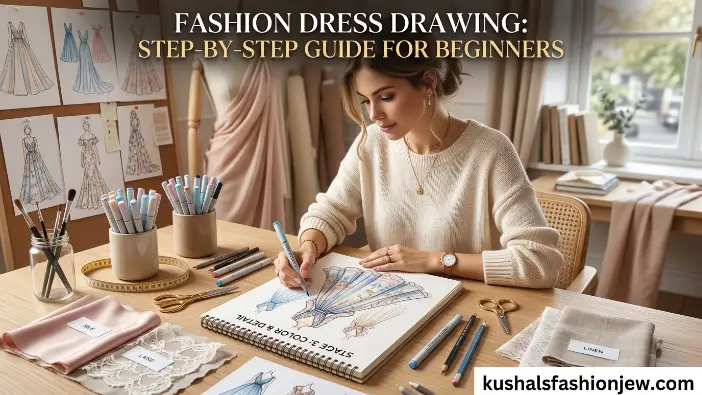
Having the right tools is very important for improving fashion dress drawing skills. Good drawing tools help artists create cleaner sketches, better shading, accurate proportions, and realistic fabric textures. Beginners do not need expensive materials to start learning fashion illustration, but using quality supplies can make the drawing process smoother and more enjoyable. Fashion designers and illustrators usually choose tools based on their drawing style, whether they prefer traditional sketching on paper or digital illustration on tablets and computers. Understanding different drawing materials helps artists select the best tools for practicing dress sketches and creating professional-looking fashion artwork.
Traditional Drawing Supplies
Traditional drawing tools are commonly used by beginners because they are simple, affordable, and easy to practice with. Basic fashion illustration usually starts with graphite pencils, erasers, sketchbooks, and fine liners. HB pencils are useful for light outlines, while softer pencils like 2B and 4B help create shading and darker details. Erasers are important for correcting mistakes and cleaning sketch lines. Many fashion artists also use rulers and French curves to improve body proportions and clothing shapes during the drawing process.
Markers, colored pencils, and watercolor paints are also popular traditional art supplies for fashion illustration. Alcohol-based markers help create smooth color blending and vibrant dress designs, while colored pencils are useful for adding fine details and texture. Watercolors can create soft fabric effects and elegant shading in fashion sketches. Traditional drawing allows artists to develop strong hand control, observation skills, and creativity, which are essential for becoming better at fashion dress illustration.
Digital Fashion Drawing Tools
Digital fashion illustration has become very popular in the modern fashion industry because it allows artists to create clean and professional designs quickly. Many designers now use tablets, stylus pens, and illustration software to sketch dresses digitally. Programs like Procreate, Adobe Illustrator, Adobe Fresco, and Clip Studio Paint offer advanced tools for coloring, layering, shading, and editing fashion sketches. Digital tools make it easier to experiment with different dress designs, color palettes, and fabric textures without starting over from the beginning.
One major advantage of digital drawing is flexibility. Artists can undo mistakes instantly, resize sketches, organize layers, and save multiple design variations easily. Digital illustration is also useful for creating fashion portfolios, social media content, and professional presentations for clients or fashion brands. Although digital tools are powerful, beginners should still practice basic hand sketching because strong traditional drawing skills help improve overall fashion illustration abilities.
Best Sketchbooks, Pencils, and Markers
Choosing the right sketchbook and drawing materials can improve the quality of fashion illustrations. Fashion artists often prefer smooth paper sketchbooks because they make sketch lines cleaner and allow markers to blend more easily. Thick paper is important for preventing ink from bleeding through pages. Spiral-bound sketchbooks are also popular because they are comfortable to use during long drawing sessions and easy to carry for practice anywhere.
For pencils, many artists use mechanical pencils for detailed outlines and graphite pencils for shading. Alcohol-based markers are highly recommended for fashion illustration because they create rich colors and smooth transitions. Brands with dual-tip markers are especially useful for drawing both large fabric areas and small decorative details. Fine liners help create sharp outlines and detailed patterns, while white gel pens are often used to add highlights and shiny fabric effects. Using quality materials helps artists create more professional and polished fashion dress drawing sketches.
Understanding Fashion Figure Proportions
Understanding body proportions is one of the most important parts of learning fashion dress drawing. Fashion illustrations are different from realistic human drawings because fashion figures are usually taller, slimmer, and more elegant in appearance. Correct proportions help dresses look balanced, stylish, and visually attractive on the figure. When proportions are incorrect, clothing designs may appear unrealistic or poorly fitted. Fashion designers use proportion guidelines to maintain consistency in their sketches and to make garments look professional. Learning figure proportions also helps artists understand body movement, posture, and how fabric flows naturally around the human body.
What Is a Fashion Croquis?
A fashion croquis is a basic template figure used by fashion designers to sketch clothing designs quickly and accurately. The word “croquis” comes from French and means a quick sketch. In fashion illustration, croquis figures are usually drawn taller and slimmer than real human anatomy to create a more elegant and stylish look. Designers use croquis templates repeatedly when experimenting with different dress ideas, silhouettes, and fabric designs. This saves time because the artist does not need to redraw the entire body every time a new outfit is created.
Fashion croquis figures are commonly drawn with simple guidelines and body shapes before adding clothing details. Most croquis templates include body positioning, shoulder lines, waistlines, hips, arms, and legs. Some artists create their own croquis style, while others use printed templates for practice. Beginners often find croquis drawing difficult at first, but regular practice helps improve accuracy and confidence. Once the croquis is complete, designers can focus more on the creative part of fashion dress drawing, such as fabric textures, dress shapes, and decorative details.
Standard Body Proportions in Fashion Design
Fashion body proportions are different from realistic human proportions because fashion illustrations are designed to emphasize clothing rather than anatomy. In a normal human anatomy drawing, the body is usually about seven to eight heads tall. In fashion illustration, however, the body is often extended to nine or even ten heads tall to create a graceful and dramatic appearance. Longer legs, narrow waists, and elegant poses help dresses appear more stylish and visually appealing in sketches.
Fashion designers use the head as a measurement unit when building body proportions. The shoulders, waist, hips, knees, and ankles are placed according to these measurement guidelines to maintain balance. Correct proportions are important because they help clothing fit naturally on the figure and make fashion sketches look professional. Beginners should practice drawing body guidelines repeatedly until they become comfortable with proportion placement. Over time, understanding proportions improves both creativity and technical drawing skills in fashion illustration.
Drawing Poses for Dresses
Poses are very important in fashion illustration because they help show movement, personality, and fabric flow in a dress design. A simple standing pose may work for basic sketches, but dynamic poses make fashion drawings more attractive and realistic. Designers often use runway-inspired poses, walking poses, or slightly tilted body positions to create elegance and visual interest. Good poses help dresses look more natural and allow artists to display details such as folds, draping, and garment shape more effectively.
When drawing poses, artists should first sketch a light action line to show body movement and balance. After that, they can build the body structure around the guideline before adding clothing details. Different dress styles may require different poses. For example, ball gowns look elegant in graceful standing poses, while casual dresses may look better in relaxed or walking positions. Practicing different poses regularly helps artists improve flexibility, creativity, and overall fashion, dress, and drawing skills.
Step-by-Step Fashion Dress Drawing Tutorial
Learning fashion dress drawing becomes much easier when the process is divided into simple steps. Professional fashion illustrators usually begin with a basic figure outline and slowly build the dress design by adding silhouettes, fabric details, textures, and colors. Following a step-by-step method helps beginners understand how clothing fits on the body and how fashion sketches are created from start to finish. With regular practice, these techniques help artists improve confidence, accuracy, and creativity in fashion illustration.
Step 1 – Draw the Basic Body Shape
The first step in fashion illustration is drawing the basic fashion figure, also known as a croquis. Start by sketching a light vertical guideline to maintain body balance and posture. Then divide the body into sections using head measurements to create proper fashion proportions. Fashion figures are usually taller and slimmer than realistic human anatomy because this style makes dresses appear more elegant and stylish. Draw simple shapes for the head, shoulders, waist, hips, arms, and legs before adding clothing details.
At this stage, it is important to keep sketch lines light because adjustments may be needed later. Beginners should focus on overall posture and body movement instead of tiny details. A clean and balanced body structure creates a strong foundation for the dress design. Practicing basic body shapes regularly improves drawing speed and helps artists understand how garments fit naturally on different poses.
Step 2 – Create the Dress Silhouette
Once the body figure is complete, the next step is creating the dress silhouette. The silhouette is the outer shape of the dress and plays a major role in defining fashion style. Blog designers usually decide whether the outfit will be fitted, loose, flowing, dramatic, or structured before sketching details. Popular silhouettes include A-line dresses, mermaid gowns, ball gowns, sheath dresses, and empire waist designs. Start with simple outline shapes around the body to establish the overall form of the garment.
The silhouette should match the body pose and fabric type to create a realistic appearance. Loose dresses may flow outward naturally, while fitted dresses should follow body curves closely. Designers often experiment with multiple silhouette ideas before selecting the final version. A strong silhouette makes the fashion sketch more visually attractive and helps viewers immediately understand the style and mood of the design.
Step 3 – Add Necklines and Sleeves
After completing the dress shape, begin adding design elements such as necklines and sleeves. These details can completely change the personality and appearance of a dress. Popular neckline styles include V-neck, sweetheart, halter, off-shoulder, square neck, and boat neck designs. Each neckline creates a different fashion effect, ranging from elegant and formal to modern and casual. Carefully sketch the neckline so it fits naturally around the shoulders and chest area.
Sleeves also add character and balance to a fashion design. Designers may choose sleeveless styles, puff sleeves, bell sleeves, long fitted sleeves, or dramatic oversized sleeves, depending on the outfit concept. While drawing sleeves, pay attention to how the fabric wraps around the arms and creates folds during movement. Combining necklines and sleeves creatively helps artists develop unique and stylish fashion dress illustrations.
Step 4 – Sketch Fabric Folds and Movement
Fabric folds are essential for making a fashion dress drawing look realistic and dynamic. Clothing naturally reacts to gravity, body movement, and fabric weight, creating folds and wrinkles throughout the garment. Light fabrics such as chiffon and silk produce soft, flowing folds, while thicker materials like denim or leather create sharper and heavier wrinkles. Understanding these differences helps artists draw clothing more accurately and professionally.
When sketching folds, focus on areas where fabric stretches or gathers, such as the waist, elbows, knees, and hemlines. Avoid drawing random lines because every fold should follow the direction of movement and body structure. Long curved lines can create flowing fabric effects, while short angular lines work better for stiff materials. Practicing fabric movement regularly helps artists create more natural and visually appealing fashion illustrations.
Step 5 – Add Details and Textures
Details and textures bring life and personality to fashion sketches. Once the main dress structure is complete, designers begin adding decorative features such as lace, pleats, embroidery, buttons, zippers, ruffles, sequins, bows, and patterns. These small elements help communicate the fabric quality, fashion style, and level of formality in the design. Fine liners and detailed pencil work are often used to create clean decorative effects.
Textures are equally important because they help viewers understand how the fabric feels and behaves. Smooth shading can represent satin or silk, while rough pencil strokes may suggest denim or wool. Layering patterns and adding realistic stitching lines can make fashion sketches appear more professional. However, artists should avoid overloading designs with too many details because excessive decoration may distract from the overall dress concept.
Step 6 – Shade and Color the Dress
The final step is shading and coloring the dress to create depth, realism, and visual impact. Shading helps show light direction, fabric folds, and body contours, making the illustration appear more three-dimensional. Artists usually darken areas where fabric overlaps or folds inward while leaving lighter areas to represent highlights. Smooth blending techniques help create soft transitions and realistic fabric textures.
Coloring allows designers to express mood, style, and creativity in their fashion illustrations. Markers, colored pencils, watercolor paints, and digital brushes are commonly used for adding color. Bright shades may create energetic fashion concepts, while darker tones can produce elegant and luxurious designs. Different fabrics require different coloring techniques; for example, satin needs shiny highlights, while cotton requires softer and more natural shading. Careful coloring and shading complete the fashion sketch and give it a polished, professional appearance.
Popular Dress Styles to Practice Drawing
Practicing different dress styles is an important part of improving fashion drawing skills. Each dress design has its own shape, structure, fabric flow, and movement, which helps artists learn a variety of illustration techniques. Service drawing multiple styles also improves creativity and helps beginners understand how clothing silhouettes change the overall appearance of a fashion sketch. From simple casual outfits to luxurious evening gowns, practicing different dress types allows designers to build confidence and develop a stronger fashion illustration portfolio.
A-Line Dress Drawing
The A-line dress is one of the easiest and most popular styles for beginners to practice. This dress is fitted around the upper body and gradually widens toward the bottom, creating a shape similar to the letter “A.” Because of its simple structure, the A-line silhouette helps beginners understand balance, symmetry, and fabric flow without dealing with overly complicated details. It is commonly used in casual wear, office fashion, and semi-formal outfits.
When drawing an A-line dress, artists should focus on smooth outward lines from the waist to the hemline. Light fabrics create soft movement, while thicker materials may produce more structured shapes. Designers can experiment with different necklines, sleeve styles, and patterns to make the sketch more creative. Practicing A-line dresses regularly helps improve silhouette drawing skills and teaches beginners how garments naturally fall around the body.
Ball Gown Fashion Sketch
Ball gowns are dramatic and elegant dresses often worn at weddings, formal parties, and red carpet events. These gowns usually feature fitted upper bodies with large flowing skirts that create volume and movement. Drawing ball gowns helps artists practice fabric layering, folds, draping, and detailed decorative work. Because of their luxurious appearance, ball gown sketches often include lace, embroidery, ruffles, sequins, and long trains.
When sketching a ball gown, designers should first establish the large skirt shape before adding details and folds. The skirt volume should appear balanced with the upper body to maintain proper proportions. Artists can also experiment with different fabrics such as satin, tulle, or chiffon to create unique textures and visual effects. Ball gown illustrations are excellent for learning how to draw dramatic silhouettes and elegant fashion designs.
Mermaid Dress Illustration
Mermaid dresses are fitted closely to the body from the chest down to the knees before flaring outward near the bottom. This silhouette creates a stylish and glamorous appearance that highlights body curves. Mermaid dress sketches help artists improve their understanding of body contours, garment fitting, and smooth fabric transitions. These dresses are commonly used in bridal wear, evening fashion, and runway collections.
While drawing a mermaid dress, it is important to show how the fabric follows the body shape naturally. Artists should pay attention to waistlines, hip curves, and the flared lower section to maintain elegance and realism. Shading also plays an important role because fitted dresses require highlights and shadows to create depth. Practicing mermaid silhouettes improves precision and helps designers create sophisticated fashion illustrations.
Casual Summer Dress Sketch
Casual summer dresses are light, comfortable, and easy to sketch, making them ideal for beginners. These dresses usually feature loose silhouettes, soft fabrics, floral patterns, and flowing movement. Summer dress illustrations help artists practice relaxed clothing shapes and natural fabric folds. Common styles include sleeveless dresses, wrap dresses, maxi dresses, and short flowy outfits.
When creating a summer dress sketch, artists should focus on soft, curved lines and lightweight fabric movement. Fabrics like cotton and chiffon create gentle folds that move naturally with the body. Designers can also experiment with bright colors, playful patterns, and accessories to make the illustration more lively and fashionable. Practicing casual dresses helps improve creativity and understanding of everyday fashion design.
Evening Gown Drawing Ideas
Evening gowns are stylish formal dresses designed for luxury events, fashion shows, and special occasions. These gowns often feature elegant silhouettes, rich fabrics, dramatic necklines, and decorative details that make them visually impressive. Drawing evening gowns allows artists to explore creativity while practicing advanced illustration techniques such as fabric shine, layered draping, beadwork, and detailed textures.
Designers can experiment with different gown styles such as off-shoulder dresses, deep V-neck gowns, high-slit designs, and long flowing trains. Rich fabrics like velvet, satin, and silk require careful shading to create realistic texture and depth. Evening gown illustrations are excellent for improving professional fashion dress drawing skills because they combine elegance, detail, and advanced garment structure in one design.
How to Draw Different Fabric Types
Understanding fabric texture is very important in fashion dress drawing because different materials behave in different ways on the human body. Some fabrics are soft and flowing, while others are thick and structured. Learning how to draw fabric correctly helps fashion illustrations look more realistic and professional. Artists must study how fabric folds, reflects light, stretches, and moves with body posture. Good fabric rendering can completely change the appearance and quality of a fashion sketch, making the dress look more natural and visually attractive.
Silk and Satin
Silk and satin are smooth, shiny, and luxurious fabrics often used in evening gowns, bridal wear, and elegant fashion designs. These materials reflect light strongly, which creates bright highlights and soft, flowing folds. When drawing silk or satin, artists should use smooth, curved lines to show graceful fabric movement. Shading should blend softly, while highlighted areas should remain lighter to create a glossy appearance.
The folds in silk and satin are usually long, soft, and fluid because these fabrics are lightweight and flexible. Artists should avoid rough or sharp lines because they can make the fabric appear stiff. Using markers, colored pencils, or digital brushes with gentle blending techniques helps create realistic shine and smooth texture. Practicing silk and satin drawing improves shading skills and teaches artists how to create elegant fabric effects in fashion illustrations.
Cotton and Linen
Cotton and linen are common everyday fabrics used in casual dresses, summer outfits, and comfortable clothing styles. These materials are softer and less shiny than silk or satin, so their folds appear more natural and relaxed. Cotton usually creates rounded wrinkles, while linen produces slightly rougher and more textured folds because of its thicker fibers. When drawing these fabrics, artists should focus on creating soft and realistic fabric movement.
Shading for cotton and linen should be lighter and less reflective compared to shiny fabrics. Small wrinkles around the waist, sleeves, and knees help show natural fabric behavior. Designers can use textured pencil strokes or light marker layering to create a realistic fabric effect. Practicing cotton and linen sketches helps beginners understand how simple fabrics drape naturally around the body in everyday fashion designs.
Tulle and Chiffon
Tulle and chiffon are lightweight, transparent fabrics commonly used in bridal gowns, layered skirts, and elegant evening dresses. These fabrics create soft, airy movement and often appear delicate and flowing in fashion illustrations. Because chiffon and tulle are thin materials, artists should use light sketch lines and soft shading techniques to avoid making the fabric look heavy. Transparency is one of the most important features to capture when drawing these fabrics.
To create a realistic, transparent effect, artists can lightly show the body shape or garment layers underneath the fabric. Soft, curved folds and overlapping layers help create volume and elegance. Tulle often appears fluffy and layered, while chiffon flows smoothly with graceful movement. Using subtle shading and careful highlights allows designers to create realistic, lightweight fabric effects in fashion dress drawing sketches.
Denim and Leather
Denim and leather are heavier fabrics with strong structure and texture. Unlike soft, flowing materials, these fabrics create sharper folds and more defined edges. Denim is commonly used in jackets, skirts, and casual dresses, while leather is popular in modern and stylish fashion designs. Drawing these materials requires stronger shading, darker shadows, and textured lines to show thickness and weight.
Leather reflects light differently from denim because it often has a smooth and polished surface. Artists can use sharp highlights and deep shadows to create a realistic leather effect. Denim, on the other hand, looks more textured and matte, so rougher pencil strokes and visible seam details work well for creating realism. Adding stitching lines, pockets, zippers, and wrinkles helps make denim and leather illustrations appear more professional and detailed.
Common Mistakes in Fashion Dress Drawing
Beginners often make several common mistakes while learning fashion dress drawing, and these errors can affect the overall quality and realism of fashion illustrations. Mistakes are a natural part of the learning process, but understanding them helps artists improve faster and develop stronger drawing skills. Many problems happen because of incorrect proportions, unrealistic fabric movement, excessive details, or weak shading techniques. By identifying these issues early and practicing regularly, artists can create cleaner, more professional, and visually appealing fashion sketches.
Incorrect Body Proportions
One of the most common mistakes in fashion illustration is drawing incorrect body proportions. Beginners often make the head too large, the legs too short, or the arms uneven, which can make the entire fashion sketch look unrealistic. In fashion drawing, body proportions are usually elongated to create a stylish and elegant appearance, so understanding fashion croquis measurements is very important. Without proper balance, even a beautiful dress design may not look visually attractive.
To avoid proportion mistakes, artists should use guidelines and head measurements while sketching the body figure. Dividing the body into sections helps maintain accuracy and symmetry. Practicing croquis drawing repeatedly improves understanding of body structure and posture. It is also helpful to study professional fashion illustrations and observe how designers create tall, balanced, and graceful figures in their sketches.
Flat and Stiff Fabric Lines
Another common issue in fashion dress drawing is creating fabric lines that look flat, stiff, or lifeless. Clothing naturally moves with the body and reacts to gravity, so dresses should appear soft and dynamic rather than rigid. Beginners sometimes draw straight lines without considering fabric weight, folds, or movement, which makes garments appear unrealistic and unnatural.
To improve fabric flow, artists should observe real clothing and study how different fabrics behave while walking, sitting, or moving. Soft curved lines usually work better than hard straight lines for lightweight fabrics. Folds should also follow body movement and fabric tension points such as the waist, elbows, and knees. Practicing fabric draping and movement regularly helps create more realistic and elegant fashion illustrations.
Overcomplicated Details
Many beginner artists try to add too many decorative details to their dress sketches, believing that more details automatically make a design look better. However, excessive embellishments, patterns, and accessories can make fashion illustrations appear cluttered and confusing. Too many details may distract attention from the main silhouette and overall dress concept, reducing the visual impact of the design.
A strong fashion illustration focuses on balance and simplicity. Designers should first create a clean and attractive silhouette before adding decorative elements such as lace, ruffles, buttons, or embroidery. Details should support the design rather than overpower it. Learning when to stop is an important skill in fashion illustration because professional sketches often look elegant through simplicity and thoughtful design choices.
Poor Shading Techniques
Poor shading is another mistake that can make fashion sketches look flat and unfinished. Beginners often apply uneven shadows, overly dark areas, or rough pencil strokes that reduce the realism of the illustration. Shading is important because it creates depth, highlights fabric folds, and shows how light interacts with clothing. Without proper shading, dresses may appear two-dimensional and lacking in texture.
To improve shading skills, artists should understand light direction and practice gradual blending techniques. Darker shadows should appear in fold interiors and areas hidden from light, while raised fabric sections should remain lighter. Different fabrics also require different shading styles; for example, satin needs smooth highlights, while denim requires textured shading. Regular practice with pencils, markers, or digital brushes helps artists create more polished and professional fashion illustrations.
Best Apps and Resources for Fashion Illustration
Modern technology has made learning fashion, dress, and drawing easier and more accessible than ever before. Today, fashion illustrators can improve their skills using digital apps, online resources, and creative inspiration platforms. These tools help artists practice sketching, experiment with colors, create professional illustrations, and learn advanced techniques from experts around the world. Whether someone prefers traditional drawing or digital fashion design, using the right apps and learning resources can greatly improve creativity, efficiency, and overall illustration quality.
Procreate
Procreate is one of the most popular digital drawing apps used by fashion illustrators and artists. It is mainly designed for iPads and offers a wide range of brushes, layering tools, shading options, and color controls that make fashion illustration easier and more professional. Many designers prefer Procreate because it allows them to sketch quickly, experiment with fabric textures, and create detailed dress illustrations directly on a tablet. The app also supports pressure-sensitive stylus pens, which help artists achieve natural sketching effects similar to traditional drawing.
One of the biggest advantages of Procreate is its simple and user-friendly interface. Beginners can easily learn the basic tools while advanced artists can explore professional features like custom brushes, blending modes, and time-lapse recording. Fashion illustrators often use Procreate for creating portfolios, social media content, and digital fashion presentations. Because of its flexibility and smooth drawing experience, Procreate has become one of the best tools for modern fashion illustration.
Adobe Illustrator
Adobe Illustrator is another powerful tool widely used in the fashion industry, especially for technical fashion drawings and vector illustrations. Unlike traditional sketching apps, Illustrator focuses on creating clean, scalable, and highly detailed artwork. Fashion designers use it to create technical flats, garment patterns, logos, fashion prints, and professional design presentations. Vector graphics remain sharp even when resized, making Illustrator very useful for commercial fashion projects and clothing production.
Although Adobe Illustrator can feel difficult for beginners at first, learning its tools provides many professional advantages. Designers can create precise lines, symmetrical shapes, and polished fashion illustrations with great accuracy. The software also includes advanced color editing, typography, and pattern design features that help artists build professional-quality fashion collections. Many fashion brands and design companies use Illustrator because it combines creativity with technical precision.
Pinterest and Fashion Mood Boards
Pinterest is an excellent platform for finding fashion inspiration and improving creativity in fashion design. Artists and designers use Pinterest to explore dress styles, fabric textures, runway trends, color combinations, and fashion illustration ideas from around the world. Creating mood boards on Pinterest helps organize inspiration and develop creative concepts before starting a fashion sketch. Mood boards are especially useful for planning themes, seasonal collections, and visual storytelling in fashion design.
Fashion designers often collect references such as fabric draping, dress silhouettes, embroidery patterns, and celebrity fashion styles on Pinterest boards. Studying these references helps artists understand current fashion trends and improve design creativity. Mood boards also help maintain consistency in color palettes and design direction. By regularly exploring inspirational content, artists can discover new ideas and continue developing their unique illustration style.
Online Fashion Illustration Courses
Online fashion illustration courses are a valuable resource for beginners and advanced artists who want structured learning. These courses teach important skills such as croquis drawing, fabric rendering, digital illustration, shading techniques, color theory, and portfolio development. Many online platforms offer video lessons, practice exercises, and professional guidance that help students improve their fashion illustration abilities step by step.
One of the main benefits of online courses is flexibility. Students can learn at their own pace from anywhere in the world without attending a physical fashion school. Some courses focus on traditional sketching methods, while others teach digital fashion illustration using software like Procreate or Adobe Illustrator. Learning from professional instructors helps artists avoid common mistakes, improve faster, and build confidence in creating professional fashion sketches and portfolios.
Frequently Asked Questions
How do beginners start fashion dress drawing?
Beginners should start fashion dress drawing by practicing simple croquis figures and basic dress shapes. Regular sketching and studying clothing references help improve drawing skills quickly.
What pencils are best for fashion sketches?
HB pencils are best for outlines, while 2B and 4B pencils are useful for shading and darker details. Mechanical pencils are also great for clean and precise sketching.
Can I learn fashion drawing without fashion school?
Yes, many artists learn fashion illustration through online tutorials, books, and daily practice. Consistent learning and sketching are more important than formal education.
How long does it take to improve fashion illustration?
Most beginners notice improvement within a few months of regular practice. Strong fashion illustration skills develop gradually with patience and continuous learning.
Is digital fashion drawing easier than traditional drawing?
Digital drawing makes editing and coloring easier, while traditional drawing improves hand control and sketching fundamentals. Learning both methods helps artists become more versatile.
Conclusion
Learning fashion dress drawing is an important step for anyone interested in fashion design, illustration, or creative art. Fashion illustration allows artists to turn ideas into visual designs before garments are made in real life. By learning body proportions, dress silhouettes, fabric textures, shading, and detailing techniques, beginners can gradually build strong drawing skills and create professional-looking fashion sketches. Every practice session helps improve creativity, observation, and confidence, making it easier to design unique and stylish outfits. Fashion drawing is not only about creating beautiful dresses but also about understanding how clothing moves, fits, and interacts with the human body.
Consistent practice and patience are the keys to improving fashion illustration skills. Beginners should continue experimenting with different dress styles, fabrics, poses, and coloring techniques to develop their own artistic style. Traditional sketching helps strengthen basic drawing skills, while digital tools provide modern ways to create polished and professional artwork. With dedication and regular learning, fashion dress drawing can open many opportunities in fashion design, digital illustration, portfolio creation, and the fashion industry. Whether someone wants to become a professional designer or simply enjoys fashion art as a hobby, mastering fashion illustration is a valuable and rewarding creative skill.